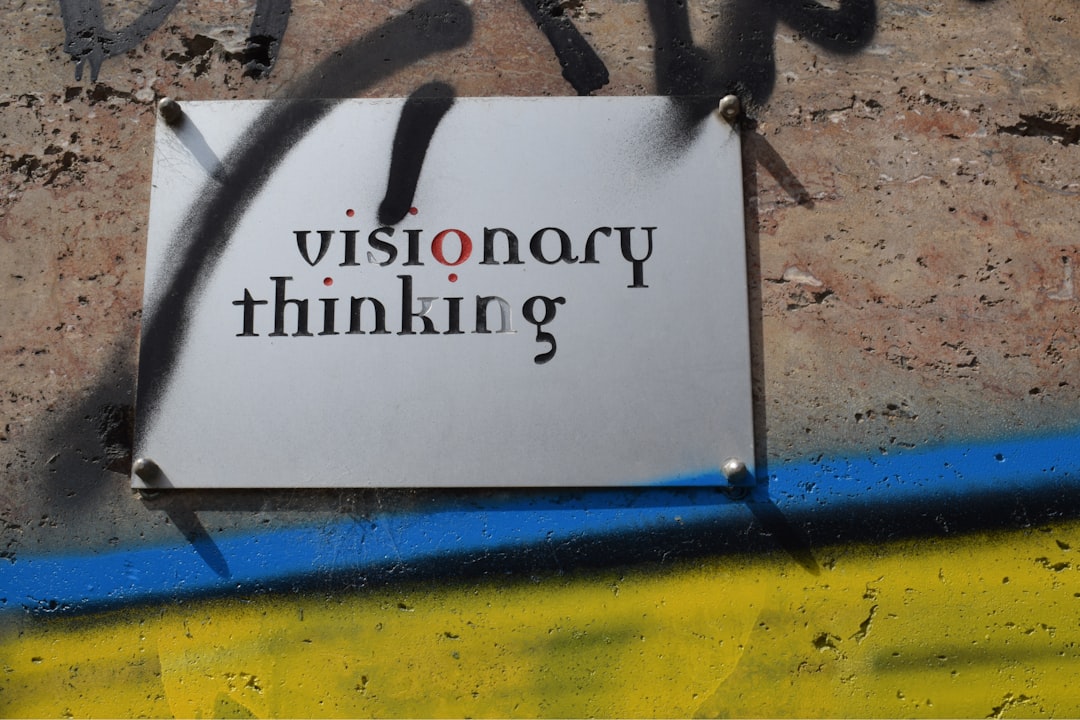
It’s not about ignoring your worries; rather, it’s about making your vision so clear and powerful that those worries become minor background noise rather than the main event. What if your best future isn’t just a hazy dream but something you can actually build, even when fear tries to talk you out of it? It’s not a magic trick. It’s about knowing how your brain functions and making use of that understanding. Your brain is a machine that creates the future.
Your brain can be compared to a powerful projector. It will project your ideas, convictions, and future vision onto your reality. Your projector will likely show you a frightening future if you are continuously reliving your worries, uncertainties, and past mistakes. But what if you could deliberately decide what to project? What if you could replace those scary slides with lively, captivating ones? That’s the essence of it.
In exploring the themes presented in “The Psychology of Vision: How to Create a Future Bigger Than Your Fears,” readers may find it beneficial to delve into related concepts of personal and professional development. A particularly insightful article on this topic is “8 Steps to Unlocking the Secrets of Business Growth, Productivity, and Profitability,” which outlines practical strategies for overcoming obstacles and achieving success. By integrating the principles discussed in both pieces, individuals can cultivate a mindset that not only confronts fears but also embraces opportunities for growth. For more information, you can read the article here: 8 Steps to Unlocking the Secrets of Business Growth, Productivity, and Profitability.
It seems easy, doesn’t it? “Just look to the future. However, it has deep psychological roots. Contrary to popular belief, reality and a vivid imagination are not as distinct in our brains.
Your brain begins to create pathways when you really visualize something, almost as if it were practicing for the real thing. This is preparing your system for action, not merely wishful thinking. The reasons behind the failure of fuzzy dreams.
“I want to be happier.” Have you ever noticed how ambiguous goals frequently just fade away? “I want to succeed.”. These are lovely ideas, but it’s like asking your brain to construct a house from a fuzzy picture.
Sure, here is the sentence with the clickable link:
Elevate, Energise, and Empower Your Life and Business with this powerful video: https://youtu.be/e80DYchY2P8?si=ZUvjy5kD4K9kH5j7
It has no idea where to begin. When your commitment is unclear, so is your vision. Details, colors, sounds, & emotions are necessary for your subconscious mind to fully engage. The “As If” principle, supported by science.
In exploring the themes presented in “The Psychology of Vision: How to Create a Future Bigger Than Your Fears,” one can find valuable insights in the article about the Octagon of Excellence. This framework emphasizes the importance of aligning personal goals with one’s core values, which can significantly enhance the ability to overcome fears and achieve a fulfilling life. To learn more about this transformative approach, you can read the article here.
| Key Points | Metrics |
|---|---|
| Understanding the power of vision | Increased motivation and goal setting |
| Overcoming fear and self-doubt | Decreased anxiety and improved self-confidence |
| Creating a compelling future | Enhanced clarity and direction in life |
| Developing a growth mindset | Increased resilience and adaptability |
In psychology, the “as if” principle is discussed. Your brain begins to believe something when you act as though it is true. This is about tricking your brain into seeing possibilities that it might otherwise miss, not about fooling yourself.
You are effectively living “as if” your ideal future is already occurring when you vividly envision it, pushing your brain to make it a reality. Fear isn’t just a bothersome bug, let’s face it. It has an integrated safety system. It serves as a natural warning system to protect you from perceived dangers.
This was crucial back when we were cavemen. A saber-toothed tiger could be the cause of a rustle in the bushes. However, these days, things that are not life-threatening at all, like public speaking, starting a business, getting a new job, or even just stepping outside of your comfort zone, frequently set off that same system. Your brain’s alarm system is the amygdala. The amygdala, a tiny, almond-shaped cluster located deep within your brain, serves as your fear detector.
It prepares you to fight, run, or freeze by flooding your body with stress hormones in response to perceived or actual danger. This is less useful when you’re merely attempting to send a crucial email, but it is helpful when you’re dealing with a real threat. Fear of Uncertainty vs. fear of not succeeding.
The fear of failure (“What if I try and I look stupid?”) & the fear of the unknown (“What if I try and it doesn’t work out?”) comprise the majority of our fears. They are both strong and have the potential to trap us. The worst part is that both of these anxieties flourish in the absence of a compelling, distinct vision.
Any route seems risky when you don’t know where you’re going. When you have a clear idea of where you want to go, making mistakes along the way is less frightening. Making a list of what you want is not the goal here.
Creating a sensory experience is the goal. Instead of constantly pushing yourself, it’s about creating an image in your head that is so vivid and captivating that it propels you forward. The “Day in the Life” Task.
In five, ten, or even twenty years, picture yourself leading the life of your dreams. Take action rather than just thinking about it. Morning Routine: When you wake up, what do you see, hear, & smell?
How does your body feel? What is the first thing you do? Work/Passion: What do you do for a living? Who do you collaborate with?
What kinds of issues are you resolving? What kind of impact are you making? How does this work feel? Relationships: What conversations are you having, who are you spending time with, and how does love feel in your life?
Environment: What is your home like? What is outside your window? Where do you live? Emotions: What are the main emotions you experience during the day? Are they joy, peace, excitement, or purpose? Jot it down.
Give particulars. Apply all five senses. Your brain will perceive it as more real if you include more details. The interview titled “Future Self”.
Imagining an interview with your future self is another effective strategy. What guidance would they offer you today? What obstacles did they overcome? What important choices did they make? This is more than just an enjoyable exercise; it enables you to access an imagined wisdom that can direct your present course of action.
The landscape you are currently in has already been traversed by your future self. To get there, you still need a car and a map, but a strong vision is the fuel. This is where taking strategic action is useful. Dreaming is not enough; you also need to act. The beauty is that your actions become less haphazard & more deliberate once your vision is clear.
Breaking It Down: From Grand Vision to Tiny Steps. If you attempt to accomplish your ambitious goals all at once, it may seem overwhelming. Divide it into more manageable, smaller pieces. It’s not “write novel,” but rather “write 500 words today,” “research publishing options,” or “create a character outline,” if your goal is to publish a novel. “Every tiny step is a win that increases momentum.
The Feedback Loop: Modifying Your Path. It’s okay if life doesn’t always go exactly as planned. Your vision is a compass, not a strict blueprint. As you act, you will receive feedback.
Certain things are going to work and some won’t. The secret is to pay attention, draw lessons from your experiences, & change direction as necessary. This is more skillfully navigating toward your vision, not giving up on it. Imagine a ship captain sailing to a far-off port. They don’t simply choose a path and stop using the GPS.
To stay on course, they continuously assess the situation and make small corrections. There are always hiccups and detours along the way to a grand vision. It is inevitable that fear will return. Doubts will surface. It’s common.
Resilience—the capacity to pick oneself up, grow, and persevere—often makes the difference between people who realize their goals and those who don’t. Reframing Failure: Not a Wall, but a Stepping Stone. A major barrier to vision is the fear of failing. When you genuinely adopt this mindset, setbacks lose their ability to stop you.
But what if failure isn’t the end but just data? What if each “failure” is just a piece of information telling you what doesn’t work, bringing you closer to what does? They turn into opportunities for learning. Self-Compassion: Its Power.
It’s simple to criticize oneself when things are difficult. However, harsh self-criticism only depletes your motivation & vitality. Put self-compassion into practice. Give yourself the same consideration and compassion that you would a close friend.
Redirect your attention gently back to your vision after acknowledging the difficulty and validating your emotions. Recall your motivation. Keep in mind that vivid, distinct vision of your ideal future.
Your anchor is that image. A vision is a living, breathing guide rather than a one-time exercise. You must frequently review and reinforce it in order to maintain its strength and vibrancy. By keeping your inner projector filled with the appropriate images on a daily basis, you can prevent your fear-monitor from taking control.
Everyday affirmations and visualizations. Make time to review your vision, just as you brush your teeth each day. Every morning, set aside some time to imagine your perfect day and future. Experience the feelings connected to it. Combine this with affirmations that support your self-belief and your capacity to realize your goals. “I can do it.
I have resilience. My dream is starting to come true. The “. Keeping a journal of your developments and discoveries.
Journaling has a lot of potential benefits. Use it to monitor your development, acknowledge minor victories, analyze lessons from failures, and discover fresh perspectives on your goals or yourself. Putting things in writing externalizes them, making them more understandable & frequently less daunting. It lets you see your progress and serves as a reminder of your continuous journey.
Putting Support Around You. It matters who you spend time with. Look for people who inspire you, believe in you, and have lofty goals for their own lives. These might be mentors, friends, or even virtual communities.
Fear and doubt can be effectively countered by their support and common goal of development. It’s equally important to pay attention to people who deplete your energy or continually feed your fears. Setting limits is acceptable in that situation. In the end, overcoming fear is not the goal of creating a future greater than your fears. It’s not possible; it’s a characteristic of humanity. It involves comprehending fear, admitting it, and then arming yourself with a vision that is so powerful and vividly imagined that it takes over your life.
It’s about making the decision to project a strong, motivating future from your inner projector, knowing that your actions and thoughts will then work together to bring that future to pass. You’ll start building it once you start seeing it.
.

Get Your Copy of Climb Greater Heights

FAQs

What is the psychology of vision?
The psychology of vision refers to the mental processes and behaviors related to how individuals perceive and interpret their future goals and aspirations. It involves understanding how our thoughts, beliefs, and attitudes influence our ability to create a future that is bigger than our fears.
How can one create a future bigger than their fears?
Creating a future bigger than our fears involves developing a clear vision of our goals, cultivating a positive mindset, and taking intentional actions towards our aspirations. This may include setting specific, achievable goals, challenging negative thought patterns, and seeking support from others.
What role does fear play in shaping our future vision?
Fear can significantly impact our ability to create a future vision. It can lead to self-doubt, limiting beliefs, and avoidance of taking risks. However, by acknowledging and addressing our fears, we can learn to overcome obstacles and pursue our goals with confidence and determination.
How does the psychology of vision impact personal development?
The psychology of vision plays a crucial role in personal development by shaping our beliefs, motivations, and behaviors. A clear and compelling vision can provide direction, purpose, and inspiration, leading to greater resilience, growth, and fulfillment in various areas of life.
What are some practical strategies for enhancing the psychology of vision?
Practical strategies for enhancing the psychology of vision may include visualization exercises, goal setting, positive affirmations, seeking mentorship or coaching, and surrounding oneself with supportive and like-minded individuals. Additionally, practicing self-care, mindfulness, and gratitude can also contribute to a more optimistic and empowered mindset.











Leave A Comment
You must be logged in to post a comment.