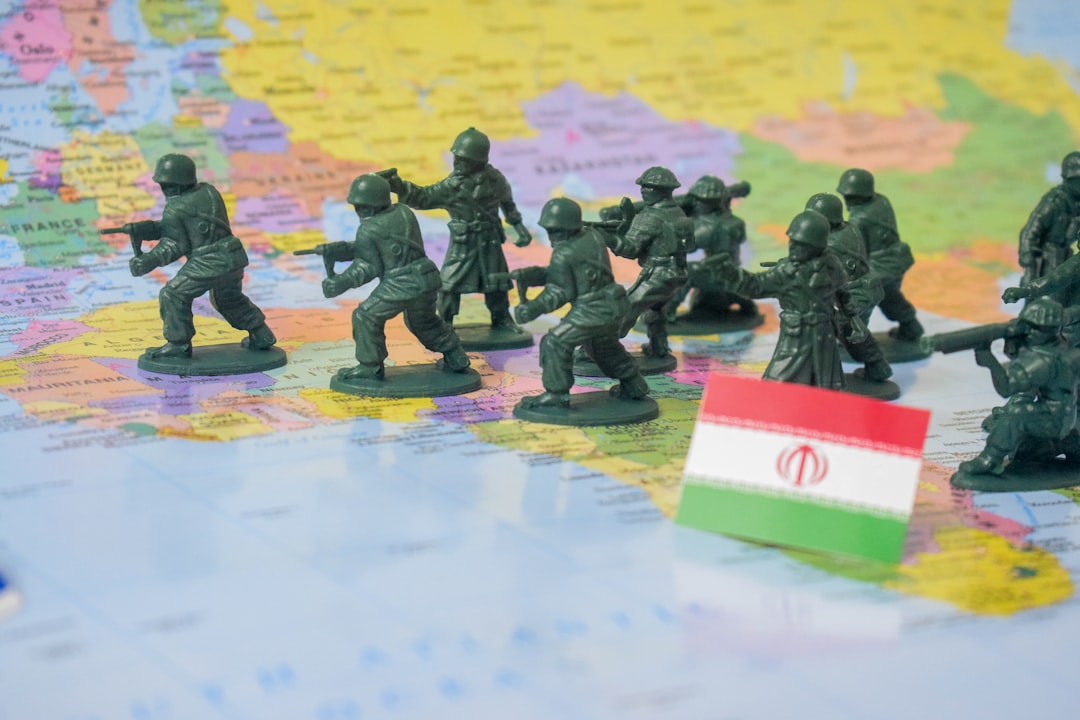
It makes sense that the majority of the conversation about war focuses on its terrible effects, which include fatalities, infrastructure destruction, and extreme human suffering. Although crucial, this story occasionally obscures the intricate and frequently unsettling ways that conflict has shaped societies throughout history and continues to accelerate some aspects of human development. Without glorifying violence or downplaying the enormous cost of conflict, this investigation explores the less-discussed aspects of war, such as its influence on innovation, the formation of identity, and its tangential role in human evolution. The Forge of Necessity: Innovation Under Duress.
In its most extreme form, war poses unique problems that call for quick fixes. These pressures force quick developments in a variety of fields, frequently eschewing the gradual pace of peacetime development. Conflict’s existential threat serves as a potent, if violent, catalyst for creativity. Conflict fuels technological advancements.
In exploring the multifaceted impacts of conflict, a related article titled “The Hidden Costs of War: A Closer Look at Societal Changes” delves into how warfare can inadvertently drive societal evolution and innovation. This piece complements the discussion in “The Benefits of War No One Talks About: Innovation, Identity, and Human Evolution” by examining the often-overlooked transformations in social structures and technological advancements that arise during times of strife. For those interested in a deeper understanding of these dynamics, you can find more information in the article available at this link.
There are numerous instances in the history of technological development where innovations were directly motivated by military need. The need for engineers and scientists to push boundaries that might otherwise remain unexplored is frequently provided by the urgency of war. The Internet and Its Forerunners: The fundamental ideas of packet switching, which form the basis of the internet, were created as a reliable military communication system that could withstand possible assaults. Anxieties during the Cold War led directly to the creation of ARPANET, the forerunner of the internet, which sought to establish a decentralized system that could function even in the event that some of its components were destroyed.
The Global Positioning System (GPS) is a ubiquitous technology that owes its existence to strategic military investment. It was first conceived and developed by the United States Department of Defense for military applications, but it soon became essential for civilian navigation. Material Science and Common Products: Wartime material innovations frequently find extensive civilian applications, as demonstrated by inventions like duct tape, which was first created during World War II for sealing ammunition cases. The need for robust, lightweight, or heat-resistant components for military hardware frequently drove advancements in synthetic materials and manufacturing techniques.
Sure, here is the sentence with the clickable link:
Elevate, Energise, and Empower Your Life and Business with this powerful video: https://youtu.be/e80DYchY2P8?si=ZUvjy5kD4K9kH5j7
Computing & Its Early Development: During World War II, the need for intricate calculations in logistics, code-breaking, and ballistics drove the creation of the first electronic computers. The digital revolution was made possible by these enormous machines, which were built to process data at previously unheard-of speeds. Nuclear Power and Its Dual Origins: The Manhattan Project, a massive scientific endeavor to develop nuclear weapons during World War II, also unlocked the basic principles of nuclear energy, which eventually led to the production of nuclear power for civilian use. Public health initiatives and advances in medicine.
In exploring the multifaceted impacts of conflict, one can also consider how personal relationships are affected during times of war. An insightful article on resolving common relationship issues can provide a deeper understanding of how individuals navigate emotional challenges amidst turmoil. For those interested in this connection, the article offers valuable perspectives on maintaining bonds in difficult times, which can be found here. This intersection of personal and societal dynamics highlights the complex nature of human evolution and identity shaped by both war and peace.
| Benefits of War | Details |
|---|---|
| Innovation | War has historically driven technological advancements and innovation in various fields such as medicine, transportation, and communication. |
| Identity | War can strengthen national and cultural identities, fostering a sense of unity and purpose among the population. |
| Human Evolution | War has played a role in shaping human societies and driving social and technological progress throughout history. |
Ironically, war has also served as a powerful catalyst for advancements in medicine. Medical procedures and public health initiatives must change quickly due to the sheer number and seriousness of injuries as well as the spread of illness in overcrowded military camps & devastated areas. Trauma Surgery and Prosthetics: The enormous number of casualties during World War II greatly accelerated developments in trauma surgery, blood transfusions, and the creation of antibiotics. Advances in reconstructive surgery and the creation of sophisticated prosthetics, such as bionic limbs that integrate with human physiology, were prompted by the need to save lives and restore functionality to wounded soldiers.
In exploring the often-overlooked advantages of conflict, one might find it interesting to consider how the fear of failure can drive innovation and resilience in individuals and societies. A related article discusses this concept in depth, highlighting how overcoming challenges can lead to personal growth and a stronger sense of identity. For more insights on this topic, you can read about the dynamics of fear and its impact on success in the article Fear of Failure. This connection emphasizes that even in the midst of adversity, there can be significant opportunities for evolution and advancement.
Epidemiology & Disease Control: Historically, military operations have resulted in devastating outbreaks of infectious diseases due to the crowded populations and unhygienic conditions. This forced the creation of organized epidemiological research, immunization campaigns, and hygienic practices, many of which had long-lasting benefits for civilian public health. Psychiatry & Mental Health: The psychological effects of war raised awareness of mental health concerns. Even though they were frequently crude by today’s standards, the study of “shell shock” during World War I and “combat fatigue” during World War II contributed to a better understanding of post-traumatic stress disorder and the creation of early psychiatric treatments.
The Creation of Identity: Personal Purpose and National Unity. Large-scale warfare in particular frequently serves as a potent furnace for identity formation. It has the power to reinforce national narratives, reinterpret social roles, and, for individuals, compel a thorough reassessment of their identity and purpose. In times of crisis, national identity & unity. A strong force for national cohesion, shared adversity—especially the existential threat of war—often transcends internal divisions and cultivates a sense of shared purpose.
Shared Sacrifice and Collective Memory: Strong collective memories of shared sacrifice & struggle are produced by major conflicts. These stories frequently serve as the cornerstone of a country’s identity, giving its people a shared historical perspective and encouraging a sense of community. Redefinition of Citizenship: War frequently calls for widespread involvement, obfuscating established social hierarchies and redefining what makes a valuable citizen. For instance, women’s employment during the war frequently resulted in long-lasting changes to gender norms and views of women’s potential. The State as Provider and Protector: During times of conflict, the state’s obligation to defend its citizens is heightened.
Increased confidence in governmental institutions and a readiness to accept more state involvement in day-to-day affairs in return for security may result from this, forming the agreement between the people and the government. Conflict between Moral Agency and Personal Identity. The harsh conditions of war can be particularly transformative for people, posing important issues of resilience, morality, and identity. Sensemaking in Uncertainty: People, especially soldiers, are forced to make sense of fragmented and stressful experiences in the chaotic and frequently morally dubious terrain of warfare.
Maintaining psychological coherence and making important decisions under duress depend on this process of “sensemaking,” or the capacity to comprehend and negotiate complex situations. Moral Decision-Making Under Duress: People are often faced with difficult moral decisions that put their moral frameworks and personal values to the test. The demands of battle can either reinforce preexisting moral positions or force a reevaluation of values in light of duty or survival. Identity Alignment and Role Coherence: A soldier’s personal identity and military role must be strongly aligned in today’s AI-accelerated warfare environments, where information overload and quick decision-making are critical. Faster cognitive processing, better leadership, and a stronger ability to outperform machines in challenging situations are all made possible by this coherence.
Human Evolution: Transcending Biological Boundaries. The intersection of military innovation and human augmentation offers a unique perspective on how conflict can indirectly influence the trajectory of human capabilities, potentially pushing beyond current physiological limits, whereas direct biological evolution usually operates over much longer timescales. Transhumanism and augmentation motivated by the military. Historically, the pursuit of military advantage has propelled developments in fields that conflate therapy, enhancement, and the fundamental definition of humanity.
Brain-Machine Interfaces (BMIs): Research on BMIs is at the forefront of human enhancement technologies, initially motivated by the desire to directly control sophisticated weapons with thought or to restore function to severely injured veterans. These interfaces have the potential to improve cognitive and motor abilities in addition to overcoming disabilities. Neurological Enhancements for Performance: Pharmacological and other interventions have been investigated in military research to improve alertness, lessen fatigue, & improve cognitive function in combat personnel. These initiatives, despite their controversial nature, demonstrate a readiness to push the limits of human potential for strategic advantage.
Advanced Prosthetics and Exoskeletons: The development of extremely complex bionic prosthetics, which are frequently funded by the military to treat injuries sustained on the battlefield, aims to create limbs that can perform better than their biological counterparts in addition to restoring lost function. Similar to this, exoskeletons—which are intended to improve strength & endurance—represent a technological advancement that has the potential to drastically change human physical capabilities. The complexity of society and the competitive pressure.
Advocates of this viewpoint contend that, from a macrohistorical standpoint, intergroup conflict—including war—has acted as a major, if frequently destructive, evolutionary pressure, propelling the development of increasingly sophisticated societal structures and technological capacities. Accelerated Societal Growth: According to some historical analyses, periods of fierce intergroup rivalry—which frequently took the form of warfare—were linked to increases in societal complexity and the uptake of new technologies. The consolidation of power, the emergence of more complex political structures, & the development of more sophisticated tools & techniques could have been prompted by the need to organize larger populations, develop more effective resource management, and innovate militarily for survival.
Agricultural and Industrial Revolutions: There have been claims that, in some historical situations, warfare contributed to the acceleration of both the agricultural & industrial revolutions. Increased food production, metallurgical developments, & the creation of new manufacturing techniques could have been encouraged by the demands of supplying armies, seizing resources, or just outwitting competitors. For example, the American Civil War greatly accelerated industrialization in the North, and the British Empire’s industrial expansion was correlated with its military might. The Selection of More Adaptive Groups: According to this viewpoint, societies or groups that created better technologies, more efficient organizational structures, or increased flexibility in the face of conflict were more likely to endure and grow, passing on these characteristics culturally, if not always biologically. Although it is up for debate, this “group selection” theory offers a convincing, if bleak, connection between conflict and the development of human societies.
In conclusion, the truth is complex & unsettling. Recognizing the aforementioned aspects of war does not mean that it is acceptable or that its great suffering is lessened. Rather, it is to confront a complicated, frequently unsettling reality: throughout history, human conflict has unintentionally acted as a potent catalyst for particular types of innovation, a significant molder of individual and collective identity, & a tangential force in the larger trajectory of human societal and technological evolution. An incomplete understanding of human history and the forces that have shaped our world results from ignoring these aspects.
Even though the costs of war are unquestionably disastrous, comprehending these less well-known byproduct advantages provides a more thorough, if unsettling, view of the complex and frequently contradictory nature of human progress.
.

Get Your Copy of Climb Greater Heights
FAQs

What are the benefits of war in terms of innovation?
War has historically driven innovation in various fields such as technology, medicine, and communication. During times of conflict, there is a heightened demand for advancements in weaponry, transportation, and strategic planning, leading to significant technological breakthroughs.
How does war contribute to the development of national identity?
War often fosters a sense of national unity and identity as citizens come together to support their country’s efforts. It can strengthen patriotism and create a shared sense of purpose, leading to a stronger national identity and solidarity.
What role does war play in human evolution?
War has been a driving force in human evolution, shaping our social, cultural, and technological development. It has influenced the way societies are organized, the development of complex communication systems, and the advancement of military tactics and strategies.
What are some examples of innovations that have emerged from war?
Examples of innovations that have emerged from war include the development of radar and sonar technologies during World War II, advancements in prosthetic limbs and trauma care as a result of wartime injuries, and the creation of the internet as a means of secure communication during the Cold War.
Are there any downsides to the benefits of war in terms of innovation and identity?
While war may lead to innovation and a strengthened national identity, it also comes with significant human and economic costs. The destructive nature of war can result in loss of life, displacement of populations, and long-term societal and environmental impacts.