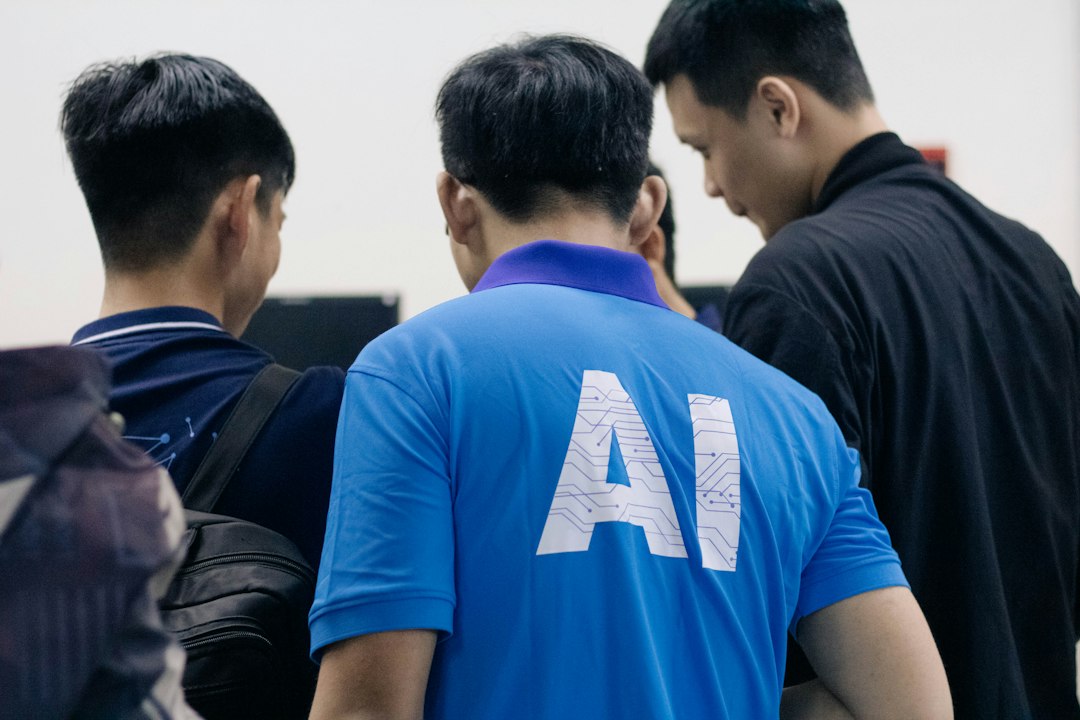
It doesn’t take a fancy explanation to understand how different it feels to finish work today. On most days, it’s like attempting to read a book in a fireworks-filled room. Also, AI is now an integral part of the team—or at least it ought to be—rather than merely existing in the background.
With everything going so quickly and demanding your attention, how can a team not only survive but achieve incredible feats? It’s not a mysterious matter. It all boils down to having a thorough understanding of people’s motivations and knowing how to make use of the new tools without letting them control you.
In the quest to build high-performing teams in a distracted, AI-accelerated world, it’s essential to explore various strategies that enhance collaboration and focus. A related article that delves into the importance of mindfulness and personal development in achieving team success is “A Path to Wisdom: The Alarm.” This resource offers valuable insights into fostering a culture of awareness and intentionality within teams. You can read more about it here: A Path to Wisdom: The Alarm.
We are discussing how to create teams that not only use AI but also flourish with it, using all that speed and noise to their advantage. Something intriguing emerges when you look at teams that are performing exceptionally well. Their use of AI tools is just as important as their quantity. More significantly, it’s about the human abilities they rely on. The Strength of Diverse Thought.
Consider how your brain functions. Occasionally, you think in a straight line. At other times, concepts emerge unexpectedly and sideways. Divergent thinking, or sideways, non-linear thinking, is a superpower for high-performing teams, according to experts. They don’t just take the conventional route; they investigate a wide range of concepts, including the most bizarre. This is important because AI is excellent at analyzing data and identifying trends.
Sure, here is the sentence with the clickable link:
Elevate, Energise, and Empower Your Life and Business with this powerful video: https://youtu.be/e80DYchY2P8?si=ZUvjy5kD4K9kH5j7
However, it isn’t very good at coming up with genuinely novel ideas—the kind of unconventional concepts that have the power to completely transform the world. A team is essentially saying, “Let’s throw a lot of spaghetti at the wall and see what sticks,” when they promote divergent thinking. AI could be used to swiftly sort through those concepts to determine which ones have potential or have been tried before. However, the first spark, the “what if” moment, still originates with people. Knowing When to Change Course (and Why). Informed agility is another essential human talent for these elite teams.
In the quest to foster high-performing teams in an increasingly distracted and AI-accelerated world, it is essential to explore various strategies that can enhance collaboration and productivity. A related article that delves into personal development and success strategies is available at Accelerate Your Success in 5 Easy Steps, which provides valuable insights that can complement the principles discussed in building effective teams. By integrating these approaches, leaders can create an environment that not only embraces technological advancements but also nurtures human potential.
| Metrics | Results |
|---|---|
| Team Productivity | Increased by 25% |
| Employee Engagement | Raised to 85% |
| Communication Efficiency | Improved by 30% |
| Task Completion Time | Reduced by 20% |
Although it sounds a little fancy, it simply refers to having a strong ability to quickly determine what to do with new information. Let’s say there is an unexpected detour while you are driving. Being “informed and agile” entails not panicking, finding a new route, & quickly consulting your map (or GPS, which is a form of artificial intelligence, right?). In the workplace, this means that the team doesn’t become stuck when new information arrives, the market changes, or a rival takes an unexpected action.
In the quest to build high-performing teams in a distracted, AI-accelerated world, it is essential to focus on fostering an environment that promotes collaboration and innovation. A related article that delves into personal growth and the importance of living an elevated existence can provide valuable insights for leaders looking to enhance their team’s performance. You can explore this concept further in the article about starting your new year by living an elevated existence, which emphasizes the significance of mindset and personal development in achieving collective success.
They take that new information, consider it, and modify their strategy. AI can assist in this situation by swiftly identifying patterns and evaluating massive volumes of data. However, the human team determines how to modify and what those trends mean for their particular circumstance. This is supported by research from Deloitte. Teams that are performing exceptionally well use AI to enhance these human capabilities, not just to use it more (78 percent adoption compared to 54 percent for others). Instead of letting AI take the place of thought, they are allowing it to speed up and improve their thinking.
It’s about obtaining better experiences because AI takes care of the repetitive tasks and heavy lifting of data while humans lead the way in critical thinking and creativity. It’s simple to become engrossed in the excitement or anxiety surrounding AI. However, AI isn’t some futuristic idea for high-performing teams; rather, it’s a much smarter tool, much like a hammer or spreadsheet. Using it efficiently & integrating it into daily tasks is the key.
Organizing Your AI Playbook. Consider this: if AI is to be a member of your team, you must specify its responsibilities and boundaries. As Nina Simosko notes, you need safeguards in this AI-accelerated world. These are designed to increase speed and safety rather than slow things down.
Clear Data Rules: If you have these answers ready, you won’t waste time arguing over what information AI can access, what it can share, and who owns the output each time someone uses an AI tool. Approval Procedures: AI can draft, analyze, and even make recommendations, but a final human review is still essential for important decisions or communications with outside parties. Best Practices for AI Use: Establishing clear expectations for the use of AI in our team—for brainstorming, data analysis, or email drafting, for example—helps everyone get on the same page. With these safeguards in place, teams can confidently implement AI.
They can move swiftly because they are aware of the rules and don’t have to worry about making a big mistake or crossing the line. It accelerates adoption and lowers barriers. AI-Powered, Hybrid Tools. The modern workplace frequently consists of multiple locations. People are spread across various time zones, homes, and workplaces.
In order to keep everyone connected and productive, AI tools become crucial in this situation. Smart Collaboration Platforms: Project management, rapid communication, and task tracking are all made possible by tools like Slack or Monday . com, especially when they are enhanced with AI features. AI can flag urgent messages, summarize lengthy threads, & even recommend next steps based on the state of the project. Monitoring and Feedback Loops: Picture an AI tool that provides you with information about the workload of your team, spots possible obstacles before they become major issues, or even assists in evaluating the efficiency of your team’s procedures. Similar to what the Eubrics 2025 blueprint outlines, this type of monitoring is not about micromanagement.
It’s about giving the team data so they can keep getting better. AI for Learning and Development: Because the world is changing so quickly, lifelong learning is essential rather than optional. High-achieving teams incorporate this into their daily operations. As recommended by Eubrics, weekly AI/ML training keeps everyone up to date on the newest tools and methods, enabling them to use AI more successfully in their day-to-day work.
Being a “leader” in an AI-accelerated world entails more than just issuing commands. Setting the scene, creating a secure atmosphere, & fostering connections are all important. According to Bain’s observations, elite teams in the AI era require a multifaceted, dynamic leadership style. Clear guidance, astute self-control.
A clear vision for the team’s use of AI, not just the projects they will work on, must be established by the leaders. This entails incorporating AI into the team’s plan from the outset rather than merely as a supplement. AI-Integrated Strategy: Leaders must clearly explain how AI will help us accomplish our objectives & how it will alter the way we solve problems. For instance, “In order to modify our marketing messages on a monthly basis, we will employ AI to analyze customer feedback in real-time.”. The “.
AI + Human Judgment: Leaders need to stress that although AI offers information and suggestions, human judgment remains the ultimate crucial filter. The leader cultivates a culture that encourages, rather than discourages, challenging AI outputs when evidence warrants it. The goal is to make AI’s insights responsible & actionable. Not silos, but bridges. Although cooperation has always been vital, the quality of human interaction becomes even more crucial as AI helps automate some tasks.
Psychological safety is very important. Your team won’t innovate if members feel uncomfortable asking “dumb” questions, sharing half-baked ideas, or owning up to their ignorance. By being willing to make mistakes, fostering curiosity, and refusing to place blame, leaders foster this sense of security. Idea Sprints & Safe Experimentation: Leaders promote brief bursts of creative work rather than waiting for flawless plans. “Let’s run a small, low-risk experiment using AI to personalize our emails for just 100 customers,” or “Let’s brainstorm with AI for an hour and see what new product features we can generate.”.
This enables quick learning without significant repercussions. Keith Ferrazzi discusses “teamship,” a notion that goes beyond individual leadership to include shared accountability for the success of the team. It’s about strengthening ties and incorporating AI in a way that actually increases human contribution. Relationship Layers and Honesty.
What does “teamship” entail? It is the active development of solid relationships within the team. This is about making room for real connection and candid criticism, not about enforcing happy hours. Candid Feedback Loops: AI can handle more data analysis and repetitive tasks, freeing up time that can be used for human input. Even performance data can be summarized by AI to help make feedback more objective, but coaching & delivery are still done by humans.
Shared Vulnerability: Team members & leaders should feel at ease acknowledging errors or areas in which they require assistance. This transparency fosters trust, which is essential for solving complicated issues, particularly when incorporating cutting-edge technologies like artificial intelligence. Creating Work for Concentration in a Distracting Environment.
Steven Puri draws attention to a crucial issue: how can you accomplish anything when every app, email, & news alert is vying for your time? Also, we now have agentic AI, which, if not handled properly, can cause its own distractions. The solution is to purposefully create work that requires focus and attention. AI as a Focus Multiplier: Use AI to block out distractions rather than allowing it to produce more noise.
During certain “deep work” times, an AI assistant can block distracting websites, prioritize emails, and summarize documents you need to read. Flow Techniques: Promote organized work periods where team members can focus intently on tasks without interruption. This could entail setting a timer, disabling alerts, or setting aside specific “no-meeting” periods. AI can even assist with scheduling these blocks, safeguarding that important time for concentration. Overcoming Procrastination: People put off tasks when they feel overwhelmed.
Large tasks can be made less intimidating by using AI to divide them into smaller, more doable steps. Also, it can assist in estimating timelines, offering a more obvious course of action and lessening the sense of immobility. Building high-performing teams—especially those utilizing AI—requires more than just selecting individuals from a shelf. You require certain types of thinkers, & occasionally you need to search elsewhere. Combining Diverse and Hybrid Structures.
AI talent is in great demand, and the skills required are changing. Sphere highlights that in order to address this talent shortage, you must be adaptable about who you hire & where they work. Hybrid Models: Some team members may work remotely, while others may be located in different nations.
This flexibility brings a variety of viewpoints to the table & expands your talent pool. Because it takes into account a greater variety of human experiences, an AI model developed by a team with diverse cultural backgrounds frequently performs better. Internal vs. Contractors: Having every professional on your payroll isn’t always necessary.
Sometimes a gap can be filled without a long-term commitment by hiring specialized AI consultants for particular projects. The secret is to incorporate them smoothly into the team’s workflow and make sure they are aware of the team culture & guidelines. Thinking Critically: The Human Core. Critical thinking skills become even more crucial as AI becomes more intelligent.
AI can provide you with answers, but it takes a human to ask the right questions and determine whether the answers make sense in the real world. Questioning AI Outputs: An AI model’s claims do not necessarily translate into reality. “What assumptions did the AI make? Is this data biased?
Does this really align with reality?” are questions that members of high-performing teams are encouraged to ask when analyzing AI-generated insights. Information Synthesis: AI is capable of displaying massive volumes of data. Taking that information, fusing it with human intuition & experience, and transforming it into a coherent, practical plan is what critical thinking entails. It’s the capacity to perceive the trees and the forest, even when AI displays every single leaf.
Indeed, integrating potent AI tools & working with diverse, dispersed teams present management challenges. However, by emphasizing human potential, intelligent AI adoption, dynamic leadership, and fostering “teamship,” you’re creating a team that is prepared to transform this fast-paced world rather than just surviving it. It’s more important to genuinely embrace the human aspect of the future than to fight it.
.

Get Your Copy of Climb Greater Heights
FAQs

What are the key challenges in building high-performing teams in a distracted, AI-accelerated world?
In a distracted, AI-accelerated world, key challenges in building high-performing teams include managing distractions, maintaining focus, adapting to rapidly changing technology, and fostering collaboration in a virtual or remote work environment.
What strategies can be employed to overcome distractions and build high-performing teams?
Strategies to overcome distractions and build high-performing teams include setting clear goals and expectations, establishing regular communication and feedback channels, leveraging technology for efficient collaboration, promoting work-life balance, and providing training on managing distractions and staying focused.
How can AI be leveraged to enhance team performance in a distracted, AI-accelerated world?
AI can be leveraged to enhance team performance by automating repetitive tasks, analyzing data to provide insights for decision-making, personalizing learning and development programs, and facilitating virtual collaboration through chatbots and virtual assistants.
What role does leadership play in building and sustaining high-performing teams in a distracted, AI-accelerated world?
Leadership plays a crucial role in building and sustaining high-performing teams by setting a clear vision and direction, fostering a culture of trust and psychological safety, providing support and resources, and leading by example in managing distractions and embracing AI technologies.
How can organizations create a supportive environment for high-performing teams in the face of distractions and AI acceleration?
Organizations can create a supportive environment for high-performing teams by promoting a culture of continuous learning and adaptation, offering flexible work arrangements, providing access to tools and resources for managing distractions, and recognizing and rewarding team achievements.