Our understanding of space is evolving, and this presents a significant opportunity for leaders with a broad perspective. These days, it goes beyond simply launching rockets. It’s about constructing things up there, collecting important data, and connecting everything back to Earth in ways that are advantageous to all. This is the new space economy, and it has the potential to unleash human potential on a whole new scale. Space is changing right now.
After the initial rush, we’re just trying to get things into orbit. The emphasis is now on making use of space as a location for construction and operation. Imagine constructing bridges & roads in the sky instead of on Earth. The goal of this “orbital economy” is to ensure that operations up there are dependable, resilient, and profitable.
In exploring the transformative potential of the space economy, it is essential to consider how visionary leadership can influence various sectors, including career development. A related article, “The True Impact of Career Coaching on Professional Growth,” delves into the ways in which effective coaching can empower individuals to reach their full potential, much like how leaders in the space economy can inspire innovation and exploration. For more insights on this topic, you can read the article here: The True Impact of Career Coaching on Professional Growth.
It’s an indication that space is evolving from a collection of audacious experiments to a legitimate industry. Investment is a major factor in this change. Hardware will always be crucial, but wealthy individuals are increasingly interested in businesses that can use the data gathered from space to create useful products. This entails spending money on artificial intelligence, smart sensors, and analytics to make sense of all that data. Businesses and governments alike are starting to recognize the strategic value of space data.
Also, there is a genuine sense of hope, in part because of initiatives like the Artemis missions. Successful moon landings are not only thrilling, but they also support the notion that commercial activity and a long-term human presence in space are feasible. This raises expectations for things like long-term lunar bases, upcoming Mars missions, and a plethora of other new business endeavors that we may not even be considering yet.
Sure, here is the sentence with the clickable link:
Elevate, Energise, and Empower Your Life and Business with this powerful video: https://youtu.be/e80DYchY2P8?si=ZUvjy5kD4K9kH5j7
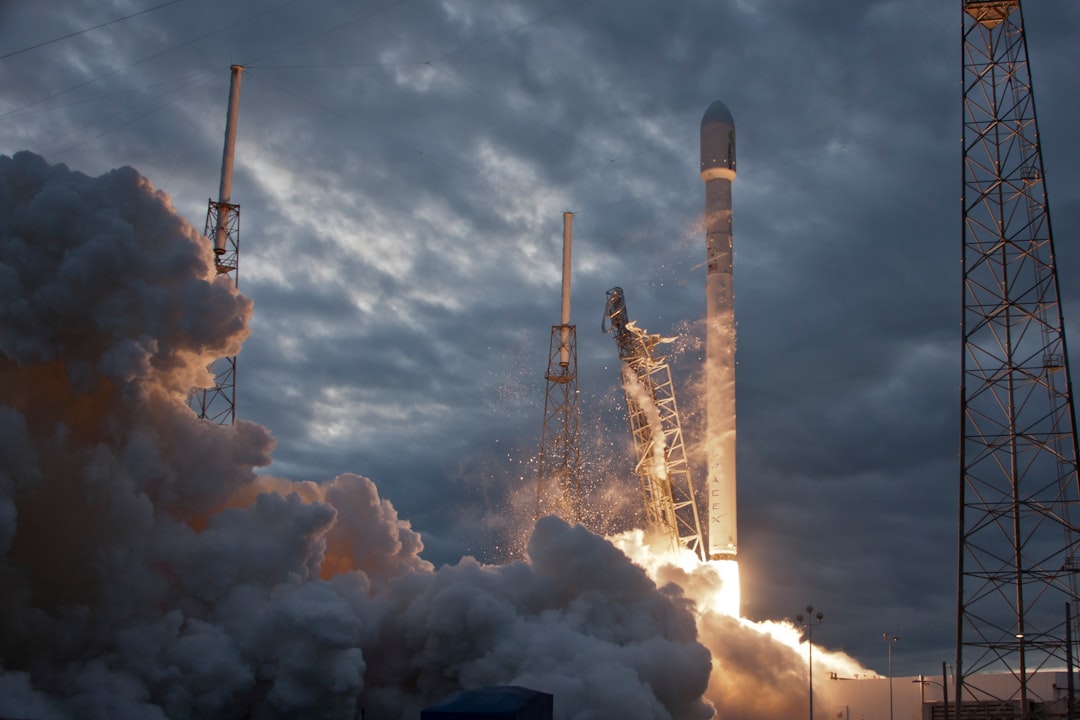
Not to be overlooked is the technology that makes all of this easier to access. Reusable rockets have completely changed the game. They drastically reduce the price of launching objects into space. This lowers the cost of many ambitious space projects, allowing more private businesses to participate and complete projects. It’s similar to a significant infrastructure project on Earth suddenly becoming much less expensive to carry out.
In exploring the transformative potential of the space economy, it’s essential to consider how visionary leadership can influence not just technological advancements but also the broader human experience. A related article discusses the concept of spiritual intelligence and its role in attracting opportunities, which can be pivotal for leaders aiming to navigate the complexities of this new frontier. By understanding the interplay between innovation and personal growth, leaders can better position themselves to harness the vast possibilities that lie ahead. For more insights, you can read the article on spiritual intelligence.
| Key Metrics | 2019 | 2020 | 2021 |
|---|---|---|---|
| Total Space Economy Value (in billions) | 424 | 366 | 420 |
| Number of Satellites Launched | 386 | 1,200 | 1,300 |
| Commercial Space Revenue (in billions) | 328 | 275 | 315 |
| Government Space Budget (in billions) | 95 | 90 | 105 |
We’re talking about an entire lunar industry, so what are the exciting new frontiers? Consider resource mining, base construction, and even tourism. Orbital services, such as manufacturing or data centers in space, will also grow significantly.
In exploring the future of the space economy, it is essential to consider how visionary leadership can drive innovation and growth in this emerging sector. A related article discusses the concept of the Octagon of Excellence and its potential to empower leaders in various fields, including space exploration. By understanding the principles outlined in this framework, leaders can better navigate the complexities of the space economy and unlock new opportunities for human potential. For more insights on this topic, you can read the article here.
Naturally, the use of space-based data for intelligence & planetary understanding will only increase. These are the industries with the biggest potential for expansion. The numbers support this as well.
By 2040, experts estimate the value of the global space economy to reach an astounding $2 trillion. Governments and private businesses collaborating, the continuous drive for commercialization, and innovative new technologies like robotics and artificial intelligence that are finding new uses in space are all contributing to this amazing growth. The leadership in the space industry must change as a result of this entire transition.
It takes more than just being a skilled engineer who can create a rocket. Strategic thinking is essential for today’s visionary leaders. They must take into account things like establishing the proper laws & regulations, making sure our space systems are resilient to disruptions, overseeing intricate supply chains that extend beyond Earth, and comprehending how all of these space endeavors can benefit businesses & nations economically and geopolitically. constructing tomorrow’s infrastructure. A more realistic, grounded viewpoint is quickly replacing the idea that space is just a frontier for exploration.
Building strong, dependable infrastructure in orbit and beyond is the main priority as we move into a new era. This is essential to realizing the space economy’s full potential and is not merely theoretical; it is actually taking place right now. Orbital cities to launch pads. The amazing accomplishment of launching was the main focus of the initial thrill of reaching space. The discussion has changed since then. We’re discussing what we can do once we get up there.
This entails building the infrastructure and systems necessary for long-term operations. The Orbital Economy Develops. Consider the “orbital economy” as the creation of operational, long-lasting space capabilities. This includes everything from serviced and upgradeable satellites to platforms intended for data processing, manufacturing, & scientific research.
Moving from short-term missions to long-term installations that support continuous economic activity is the goal. Reliability and resilience are fundamental concepts. Infrastructure in space must be resilient, just like on Earth.
This entails creating systems that can endure the challenging conditions of space, be upgraded or repaired, and continue to function even in the event that a component fails. To ensure long-term viability, leaders are concentrating on incorporating redundancy and fault tolerance into all facets of space operations. The Space Infrastructure Business Case. Infrastructure development is primarily driven by financial performance.
New revenue streams and investment opportunities arise when space is transformed into a location where physical assets can be constructed, maintained, & operated effectively. This is about developing companies that can prosper in the space environment, not just government-funded projects. The first space-based factory. The potential for manufacturing is one of the most fascinating areas of space infrastructure.
The special circumstances of vacuum and microgravity present opportunities for the production of goods and materials that are challenging or impossible to make on Earth. The benefits of manufacturing in microgravity. Imagine producing specialized alloys, ideal semiconductor crystals, or incredibly robust, lightweight materials that are only possible in zero gravity. These are not merely futuristic concepts; businesses are actively investigating and creating the technologies required to bring them to pass. Orbit 3D printing.
3D printing, also known as additive manufacturing, is a particularly promising space technology. It eliminates the need to launch everything from Earth by enabling on-demand production of tools, replacement parts, & even complex components directly in orbit or on other celestial bodies.
The future’s supply chain. The construction and upkeep of space infrastructure necessitates a complicated supply chain. From the raw materials that could be obtained from asteroids to the launch services and in-orbit assembly capabilities, forward-thinking leaders are considering how to develop this chain. Space as the Ultimate Sensor in the Data Revolution.
An unmatched viewpoint for studying the Earth and the larger cosmos is provided by space. However, the true value is found not only in gathering this data but also in efficiently analyzing & applying it—often with the help of artificial intelligence. Uncovering Space Data’s Strategic Value. Satellite data has already transformed environmental monitoring, weather forecasting, and navigation. These days, its uses are growing significantly, making it a vital tool for companies and governments looking to comprehend intricate global systems and make wise choices.
Earth Observation for Business Understanding. Businesses are using sensor data and satellite imagery more and more to learn about the availability of natural resources, global supply chains, agricultural yields, and even the effects of climate change. Investment decisions, operational optimization, and the identification of new risks and opportunities can all be influenced by this data. Applications for intelligence and security. Intelligence from space is becoming essential for both international stability and national security.
Satellites can track the movement of people & goods, monitor geopolitical events in real time, & provide vital information for humanitarian relief & disaster response. AI and Machine Learning: Understanding the Universe. The amount of data produced by space-based sensors is enormous. In order to process, analyze, and extract meaningful patterns from this data, artificial intelligence and machine learning are crucial tools.
We can spot patterns, forecast events, and make quicker, more precise decisions thanks to these technologies. The Development of the Space Analytics Sector. The increasing significance of data is evident in the investment environment. Startups that specialize in transforming unprocessed space data into useful intelligence are receiving venture capital in addition to satellite hardware. From unprocessed pixels to tactical insights.
These businesses are developing advanced platforms and algorithms that can process sensor readings, interpret satellite imagery, & combine data from various sources to produce thorough analyses. Making complex space data usable and accessible for a variety of users is the aim. Orbit provides predictive analytics. Imagine being able to predict crop failures weeks ahead of time, more accurately predict the effects of natural disasters, or use real-time satellite observations to predict changes in the world’s commodity market. Analytics driven by AI are enabling these predictive capabilities. Space is the key to the future of information.
Space will become an even more important source of information as more sensors are installed and AI capabilities develop. To obtain a competitive advantage and tackle global issues, leaders must comprehend how to use this data. The Artemis Effect: Creating the Next Growth Wave.
The Artemis program and other human moon missions are far more than just scientific endeavors. It’s a potent catalyst that opens the door for upcoming business endeavors by bringing fresh hope and noticeable advancements to the space economy. The Lunar Habitation Dream is validated.
The idea of human activity beyond Earth is critically validated by successful lunar missions. They lower perceived risk and promote investment in long-term lunar development by proving that complicated operations in deep space are feasible. In the direction of permanent lunar settlements. The goal of the Artemis program is to create a long-term presence rather than merely visiting.
These missions’ technologies & operational experience are setting the stage for long-term lunar bases, establishing a location for resource use, research, & eventually business ventures. On the horizon is Mars. It’s common to think of the Moon as a stepping stone toward Mars. The difficulties of traveling to and residing on the Red Planet are directly related to the technological developments and lessons learned from lunar missions.
This encourages the idea that human reach is gradually expanding. There are new commercial prospects. New business interests are already being generated by the expectation of a lunar presence. Innovative business models and investments are increasingly focusing on the Moon, from resource extraction & infrastructure development to scientific research and tourism. Investment and Innovation and the “Artemis Effect”. The entire space economy is impacted by the renewed national & international emphasis on lunar exploration, which boosts confidence and spurs innovation in a number of industries.
The advancement of public-private partnerships. Artemis is a prime example of how public and private organizations can work together successfully. This approach is proving to be very successful in cutting expenses & speeding up development, which encourages more private sector participation in large-scale initiatives. promoting the development of technology.
Lunar missions’ rigorous requirements push the limits of technology & engineering. These lofty objectives are driving advancements in fields like materials science, robotics, life support, and propulsion, with applications that go well beyond space. An International Center for Space Operations. Certain areas and businesses are positioned as leaders in the emerging space economy due to the attention & resources devoted to lunar exploration, which attracts talent, research, and investment. Lowering the Bar: Increased Access & Reusable Rockets. Due in large part to the development of reusable rocket technology, launch costs have drastically decreased, radically changing the commercialization of space.
This invention is making space more accessible to a greater number of players and ambitious endeavors. Reusability and Economics. Recovering and reusing rocket boosters significantly reduces the cost of each mission. Businesses can now refurbish and relaunch existing hardware, resulting in significant cost savings, rather than creating a new rocket for each launch. Making Space Accessible to More Actors.
Large government organizations are not the only ones who gain from this cost reduction. It promotes a more varied and dynamic space ecosystem by giving smaller businesses, academic institutions, and even individuals the chance to launch payloads into orbit. Innovation & commercialization accelerated. The economic viability of many space-based business models significantly improves with reduced launch costs.
This promotes increased private investment, quicker technological development, and faster commercialization of space-related goods and services. Extending the Range of Space Projects. Reusable rockets have an impact that goes beyond merely launching satellites into orbit. It opens up a plethora of new opportunities for space exploration.
Small satellite constellations and cube-satellites. The number of small satellites, such as CubeSats, has skyrocketed due to the affordability of launch. These are frequently used in massive constellations to offer worldwide coverage for services like scientific research, internet access, & Earth observation. Space Travel Is a Reality. Although it is still in its infancy, the decrease in launch costs is a vital facilitator for the growing space tourism sector, increasing the financial viability of orbital and suborbital flights.
In-orbit maintenance and debris clearance. The long-term sustainability of the space environment depends on the deployment & operation of robotic missions for in-orbit servicing, satellite maintenance, and even the removal of space debris, all of which are made feasible by more affordable access to space. Beyond the obvious: The Next Growth Frontiers. Even though the space economy is currently in an exciting state, the next wave of growth areas needs to be identified and developed in order to have truly transformative potential. These new sectors have the potential to transform industries and establish new economic giants.
Resources & Beyond the Lunar Frontier. As previously noted, the Moon is quickly changing from an exploration destination to a place of economic activity. What can be extracted, constructed, & produced on the lunar surface is becoming more important. Use of Lunar Resources (ISRU). One major economic driver is the possibility of extracting resources from the Moon, such as rare earth elements and water ice (for fuel and life support).
This could lessen dependency on supplies from Earth and increase the viability of deep-space missions. Lunar bases as scientific and commercial hubs. Lunar bases, whether permanent or semi-permanent, will function as hubs for scientific study, technological advancement, and possibly even specialized tourism or microgravity production. The prospects for mining asteroids. Even though it is farther off, the possibility of mining valuable minerals and resources from asteroids is still a very alluring long-term prospect that is motivating research into autonomous extraction and transportation technologies. Orbital Infrastructure & Services.
This industry includes the increasing demand for facilities and services in orbit to support current and upcoming space operations. Cloud computing and orbiting data centers. Particularly for applications needing low latency or secure processing, the special conditions of space may provide benefits for some forms of data processing & storage, resulting in the creation of orbital data centers. Assembly & maintenance in orbit. In order to prolong the life and functionality of space assets, it is becoming more and more crucial to be able to assemble large structures in orbit (such as telescopes or space stations) or maintain and repair already-existing satellites.
Factories for Manufacturing in Space. As previously mentioned, the possibility of producing high-value goods in the vacuum and microgravity of space through specialized manufacturing could lead to the creation of whole new industries. Intelligence and Monitoring Enabled by Space. The capacity to monitor and obtain intelligence from space is rapidly growing, affecting many different industries. Advanced Analytics and Earth Observation. Future capabilities for everything from resource management and urban planning to environmental monitoring will include advanced multi-spectrum analysis, predictive modeling, & real-time situational awareness.
International connectivity and communication. One significant area of growth is the extension of satellite internet services, particularly in underserved areas, which is transforming global connectivity & opening up new digital economies. SDA stands for Space Domain Awareness. Understanding & monitoring objects in orbit is essential for avoiding collisions and guaranteeing the secure operation of space systems as space becomes more crowded.
The result is an increase in SDA services and technologies. Leadership for the Next Frontier: Prioritize strategy over show. The development of the space economy necessitates a new style of leadership. Visionary leaders are able to look beyond the latest technological innovations and concentrate on the strategic, legal, and financial underpinnings required for long-term development and the general shaping of human potential. The Strategic Need for Space Executives. Simply being a great engineer & launching is no longer sufficient.
Leaders need to have a more comprehensive strategic vision that takes into account long-term societal effects of space activities, economic viability, and geopolitical concerns. Government & Regulation in Space. Clear and efficient regulations are critical as more entities participate in space. In order to foster responsible space activity, avert conflict, and guarantee fair access, leaders must actively contribute to the development of international agreements and national policies.
creating supply chains that are resilient. Space-related supply chains are becoming more intricate and worldwide. From the procurement of raw materials to the production of components and the provision of launch services, leaders must concentrate on creating strong, diverse, and secure supply chains. Geopolitical and economic advantages.
Visionary leaders know how to use space capabilities to boost an organization’s or country’s geopolitical standing and produce real economic benefits. This entails spotting commercialization opportunities, encouraging innovation, and setting oneself up for future expansion. Developing Human Potential in and Through Space. The expansion of human potential is the ultimate objective of the space economy.
A future where space benefits all of humanity will be shaped by leaders who uphold this idea. Training and Workforce Development. We need a skilled workforce to construct this future. In order to motivate the upcoming generation of space-focused scientists, engineers, entrepreneurs, and policymakers, leaders must support educational programs. Inclusivity & Ethics.
It’s critical to think about the ethical ramifications and make sure that the advantages are distributed fairly as we increase our presence in space. Leaders should think about the long-term stewardship of space resources & encourage diversity in the space industry. Beyond Rockets: Innovation.
Although rocketry is fundamental, real vision is found in identifying and promoting innovation throughout the space economy. This covers developments in biotechnology, materials science, artificial intelligence, and how they can be used on Earth and in space. The space economy is a quickly developing reality rather than a far-off fantasy. The next frontier of human potential is not just in orbit but within reach for leaders who can blend bold vision with sensible strategy. It’s about creating, establishing connections, learning, and eventually broadening the definition of what it means to be human in the universe.
Now is the time to take the lead.
.

Get Your Copy of Climb Greater Heights
FAQs

What is the space economy?
The space economy refers to the economic activities related to space exploration, satellite technology, space tourism, and other commercial ventures in outer space.
How is the space economy currently evolving?
The space economy is currently evolving with the emergence of private space companies, increased investment in space technology, and the potential for space tourism and resource extraction.
What role can visionary leaders play in shaping the space economy?
Visionary leaders can play a crucial role in shaping the space economy by driving innovation, fostering collaboration between public and private sectors, and advocating for policies that support sustainable and responsible space exploration.
What are some potential opportunities in the space economy?
Some potential opportunities in the space economy include satellite communication and imaging services, asteroid mining, space tourism, and the development of space-based infrastructure for scientific research and manufacturing.
What are some challenges facing the space economy?
Challenges facing the space economy include regulatory hurdles, technological limitations, environmental concerns, and the need for international cooperation in managing space resources and activities.