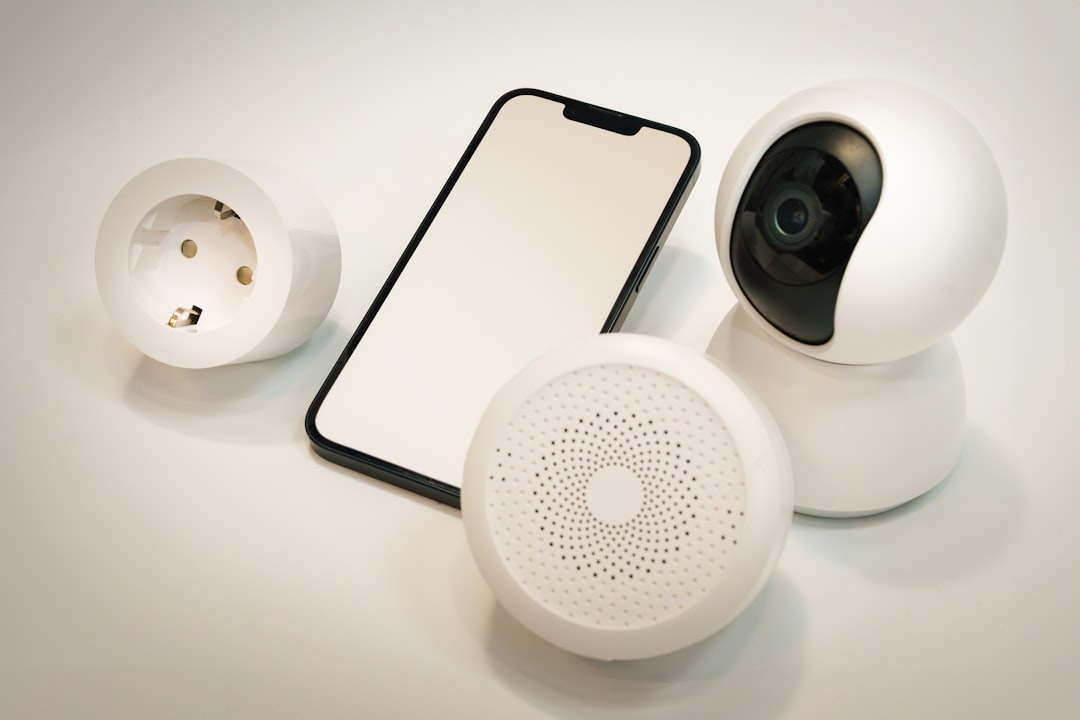
It takes more than sophisticated algorithms to create AI solutions that genuinely resonate with people. It’s about comprehending our motivations. Consider this: the best tools feel almost human, anticipate your needs, & simplify your life. For today’s tech entrepreneurs, that is the sweet spot.
Understanding the nuanced dance of human behavior and incorporating it into AI is more important than simply manipulating data. Why Your AI Superpower Is Human Behavior. Let’s face it. Everybody has used AI that seems awkward, impersonal, or just plain boring. This frequently occurs when AI is developed in a bubble without a true understanding of human thought, emotion, and behavior.
In exploring how tech entrepreneurs can leverage human behavior insights to create next-generation AI solutions, it’s essential to consider the broader context of business growth and productivity. A related article that delves into this topic is “8 Steps to Unlocking the Secrets of Business Growth, Productivity, and Profitability.” This resource provides valuable strategies that can complement the development of AI technologies by emphasizing the importance of understanding customer needs and behaviors. For more insights, you can read the article here: 8 Steps to Unlocking the Secrets of Business Growth, Productivity, and Profitability.
Here, insights into human behavior become your secret weapon. Going Beyond Simple Facts. Simple metrics like clicks, time on page, and purchases are used by many AI tools. These are helpful, of course, but they’re similar to reading a book’s synopsis rather than the entire narrative. They explain what occurred, but they don’t explain why.
Deeper investigation leads to true comprehension. It entails comprehending the reasons behind those clicks, the annoyances that result in a drop-off, or the unconscious factors that influence a consumer’s decision to select one product over another. Take a look at what Human Behavior, a recent startup, is doing. They recently raised $5 million because they are looking at more than just clickstream data. On session replays, they are utilizing computer vision. Consider watching a video of someone utilizing your app or website.
Sure, here is the sentence with the clickable link:
Elevate, Energise, and Empower Your Life and Business with this powerful video: https://youtu.be/e80DYchY2P8?si=ZUvjy5kD4K9kH5j7
You can see where they zoom in, where they hesitate, and how they move their mouse. This is a clear window into their experience rather than merely data. This enables them to go beyond simply knowing whether users converted or churned. For automated QA and support tools, this kind of insight is invaluable. Consider an AI that not only detects a bug but also comprehends the annoyance it caused the user.
In the rapidly evolving landscape of artificial intelligence, understanding human behavior is crucial for tech entrepreneurs aiming to develop innovative solutions. A related article that delves into the intersection of technology and human insights can be found at this link, offering valuable perspectives on how to effectively integrate behavioral data into AI development. By leveraging these insights, entrepreneurs can create more intuitive and user-friendly applications that resonate with their target audience.
| Key Metrics | Insights |
|---|---|
| Customer Engagement | Measure the level of interaction and response from customers towards AI solutions. |
| Accuracy of Predictions | Evaluate the precision and correctness of AI algorithms in predicting human behavior. |
| Data Privacy Compliance | Assess the adherence to data protection regulations and privacy standards. |
| Feedback Loop Efficiency | Analyze the speed and effectiveness of integrating customer feedback into AI solutions. |
How to Get Those Essential Human Perspectives. Gaining insight into human behavior requires more than just speculation. It involves careful listening and observation. Examine and examine actual user journeys.
In the rapidly evolving landscape of artificial intelligence, understanding human behavior is crucial for tech entrepreneurs aiming to create innovative solutions. A related article discusses how coaching can empower achievers to excel by enhancing their decision-making and leadership skills, which are essential when integrating human insights into AI development. For more on this topic, you can read about the importance of coaching in personal and professional growth here. This connection between personal development and technological advancement highlights the multifaceted approach needed to succeed in today’s competitive environment.
For a moment, forget about outdated reports. Examine how customers really use your product in detail. There is more to this than just dashboards for analytics. The Power of Computer Vision and Session Replays. Companies like Human Behavior are at the forefront of this, as was previously mentioned.
Using AI-powered computer vision, they transform ordinary session replays—videos of users interacting with your product—into something far more potent. AI can identify frustrating, perplexing, or joyful moments in hundreds of recordings without the need for human sorting. It can recognize patterns in user behavior that a human might overlook.
Consider this: an AI might detect that users frequently try to click on a non-interactive element or scroll past a particular feature, exposing a design flaw. This daily reporting on drop-offs, bugs, & feature usage is very helpful in transforming unprocessed data into useful insights. Contextual inquiry and user interviews. Don’t undervalue just having conversations with others. Watch how they use your product in the wild. “What were you thinking here?” and “What was your goal in this moment?” are examples of open-ended questions that can reveal motivations, mental models, and pain points that data alone cannot.
You may discover that a feature you believed to be simple is actually confusing due to an unspoken cultural norm, or that users are using your product in a creative yet unexpected way that may lead to the development of new features. Using behavioral hypotheses in A/B testing. A/B testing is a classic for a reason; however, you can improve it by using behavioral hypotheses as the foundation for your tests. Rather than simply comparing “button color A versus B,” think about “if we provide clearer social proof (behavioral insight), will users feel more confident and complete the purchase?” This changes the focus of your testing from simple design adjustments to comprehending and impacting human decision-making.
creating artificial intelligence that is intuitive and feels natural. How do you incorporate those insights into your AI once you have them? It’s about creating an experience that feels more like working with a smart assistant than conversing with a machine. Developing Intuitive User Experiences. There is more to this than just aesthetics.
It’s about creating interactions that complement the way people naturally process information and make choices. Using behavioral patterns to predict personalization. Imagine an AI that, rather than merely displaying “items similar to what you bought,” actually predicts what you might require next based on your browsing context, past behavior, and even minute cues like your hesitations or scrolling speed. This is more than just suggestions; it’s intelligent, anticipatory personalization.
PwC’s forecasts emphasize this exact feature, with agentic AI emerging as a key component of such personalization. For example, before you even open your calendar, an AI that recognizes your typical work schedule might proactively recommend a report that you typically review on Tuesdays. Human-like voice and multimodal interfaces. Human communication is not limited to texting. Tone, gestures, & visual cues are all used.
To produce more natural interactions, next-generation AI must embrace multimodality, which combines voice, vision, & other inputs. You’re getting closer to a truly human-like assistant if someone says, “find me that green shirt I saw last week,” and your AI is able to process the voice command, remember previous browsing data, & understand what “green shirt” meant in that particular context. Multimodality is emphasized in the McKinsey report as a major factor influencing the impact of AI in the future. Transparency & control are key components of building trust.
When it comes to things they don’t understand, people are inherently wary. AI must be transparent in order to be fully incorporated into our daily lives. Explainable AI (XAI) for Human Understanding. If your AI recommends a product, can it explain why it believes it’s a good fit based on your past behavior and preferences? This “explainability” fosters trust when an AI makes a recommendation or a decision.
Translating the AI’s reasoning into language that humans can comprehend is more important than disclosing the intricate algorithms. Users benefit from this transparency by feeling less powerless and more in control. granting users control over AI actions. People desire to have a sense of control.
Give users command over the AI’s behavior. Instead of making the AI feel like an overbearing force, this agency encourages a sense of partnership with it. Can they change how helpful it is?
Can they reject its recommendations? Offering choices to change the kinds of content displayed or giving “don’t show me this again” feedback, for instance, can help a user train an AI to their preferences when the AI is attempting to personalize content. Human judgment and entrepreneurial instinct: their roles.
AI is strong, but it’s not a panacea. An important finding from Harvard Business School research is that human judgment is still the most important factor in entrepreneurship and innovation. The sweet spot for AI-human cooperation. AI is able to analyze vast amounts of data & identify patterns that humans are unable to.
However, it still requires a human touch to determine whether those patterns result in a genuinely powerful idea or direct a long-term strategy. AI as a Supplement, Not a Substitute. Instead of thinking of AI as the captain, consider it a very intelligent co-pilot. It can identify possible problems, forecast results, and assess market trends. However, it takes an entrepreneurial mind to understand what those insights mean for your particular business, your values, & your vision.
Harvard’s study revealed that while AI guidance benefited successful business owners, it might actually make things worse for less successful ones. This demonstrates how the human utilizing AI determines its efficacy. Even sound AI advice may be misused if you don’t have the fundamental knowledge or strategic vision.
Using AI for More Than Automation: Strategic Foresight. Use AI to obtain more insight rather than merely automating monotonous tasks, though that is also beneficial. AI must be viewed as a strategic tool for exploration and decision support rather than merely a labor-saving tool if it is to be able to forecast changes in customer sentiment or identify new opportunities that you haven’t even thought of. This is directly addressed by McKinsey’s emphasis on reasoning and agentic AI, which goes beyond simple automation to support more in-depth strategic choices.
AI Solution Scaling Throughout the Organization. You will want to expand the scope of your AI solution as it develops. This entails carefully considering how individuals within your company will utilize & profit from it. Creating Centralized AI Teams and Studios. PwC accurately predicted that businesses would adopt enterprise-wide AI strategies, frequently through centralized AI studios.
Efficiency is only one aspect of this; consistency and utilizing common insights are also important. promoting cooperation between designers, behavioral scientists, & data scientists. It’s not only data scientists who can use an AI studio. It must be a melting pot where UX/UI designers, behavioral scientists, & data specialists collaborate closely.
The designers convert these insights into user-friendly interfaces, the data scientists create the underlying models, and the behavioral scientists make sure the user insights are accurate and applied correctly. Building AI that genuinely comprehends and responds to human needs requires a cross-functional approach. It keeps AI from developing into a stand-alone technical project. democratizing access to & comprehension of AI in your company.
Your AI tools will have a greater impact if more employees in your organization can use, comprehend, & trust them. This entails offering instruction, user-friendly interfaces for non-technical users, and transparent explanations of the functions and benefits of the AI. For example, sales teams are more likely to use an AI-powered personalization engine to close deals if they comprehend how it operates & have faith in its recommendations. Continuous Learning and Agentic AI: Keeping Up. The world of AI is constantly evolving.
Developing next-generation solutions requires constant change. An important advancement is agentic AI, which has the ability to act independently & learn from its surroundings. Adopting Agentic AI for Human-Centric, Dynamic Systems.
Agentic AI takes proactive actions to accomplish objectives rather than merely being reactive. At this point, AI really begins to feel like a proactive, intelligent partner. AI agents that pick up on user preferences and adjust accordingly. Imagine an AI assistant that, over time, learns your preferences and begins to predict your needs based on minute variations in your daily routine or even your emotional state (if deduced ethically). This is ongoing adaptation rather than merely personalization.
If an agentic AI notices that you frequently work late on Tuesdays, it may automatically change your notification settings or recommend that you order dinner without your explicit consent. Only a thorough comprehension of human behavior can enable such a profound degree of adaptation. Designing Agentic Systems with Ethics in Mind. Increased independence entails increased accountability. It’s critical to incorporate ethical considerations into the fundamental design of agentic AI as it becomes more widely used.
An AI that comprehends human behavior must also comprehend human values and boundaries in order to safeguard user control, prevent biases, and protect user privacy. According to McKinsey, transparency is crucial in this situation. In addition to having clear ways to override an agentic AI’s actions or preferences, users must comprehend what an agentic AI is doing and why. Tech entrepreneurs can go beyond just building smart machines by incorporating human behavior insights into every step of the AI development process, from first observation to the moral implementation of agentic systems. They are able to create AI solutions that are not only intelligent but also highly intuitive, reliable, and genuinely beneficial to people.
This is about creating a better future, one human-centric AI solution at a time, not just better technology.
.

Get Your Copy of Climb Greater Heights
FAQs

What are human behavior insights in the context of AI solutions?
Human behavior insights refer to the understanding and analysis of how people think, act, and make decisions. In the context of AI solutions, these insights are used to develop algorithms and models that can better predict and respond to human behavior.
How can tech entrepreneurs incorporate human behavior insights into AI solutions?
Tech entrepreneurs can incorporate human behavior insights into AI solutions by leveraging data from various sources such as social media, online interactions, and consumer behavior. They can also use advanced analytics and machine learning techniques to identify patterns and trends in human behavior.
What are the benefits of integrating human behavior insights into AI solutions?
Integrating human behavior insights into AI solutions can lead to more accurate predictions, better personalization, and improved user experiences. It can also help businesses better understand their customers and make more informed decisions.
What are some challenges in building next-generation AI solutions with human behavior insights?
Challenges in building next-generation AI solutions with human behavior insights include ethical considerations around data privacy and consent, the need for diverse and representative data sets, and the complexity of modeling human behavior accurately.
What are some examples of AI solutions that have successfully integrated human behavior insights?
Examples of AI solutions that have successfully integrated human behavior insights include recommendation systems in e-commerce platforms, personalized content delivery in media streaming services, and predictive analytics in healthcare for patient outcomes.