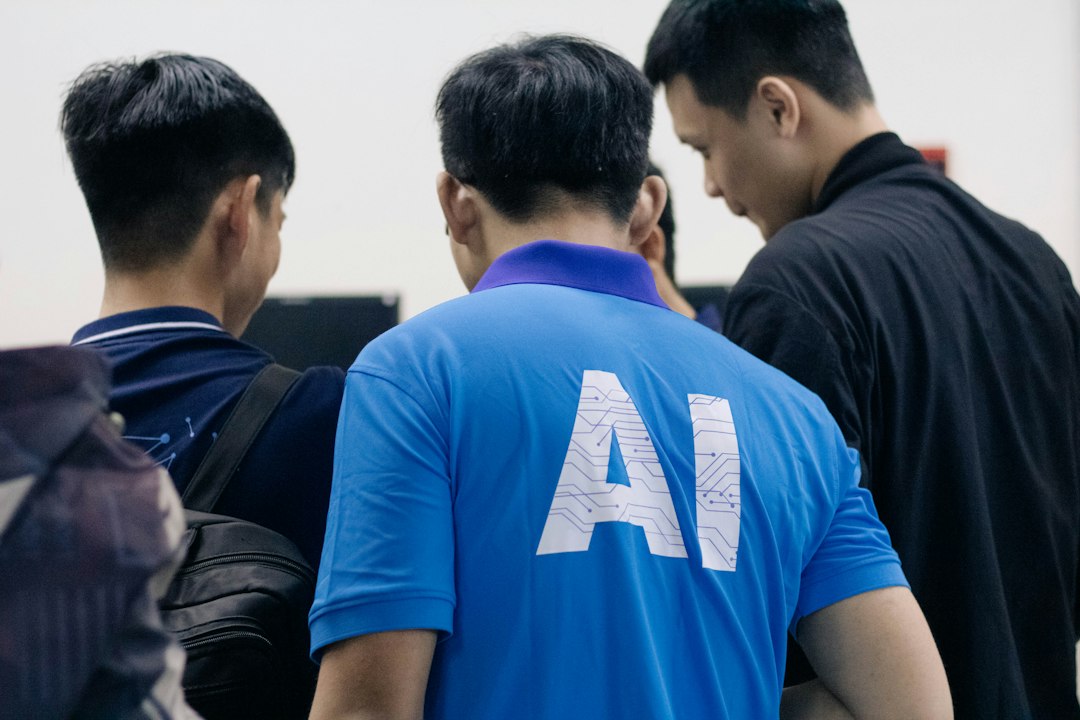
The landscape of wealth creation, preservation, and strategic decision-making is being drastically altered by the rapid integration of Artificial Intelligence (AI) across industries. Chief Executive Officers (CEOs), Ultra-High-Net-Worth Individuals (UHNWI), and other seasoned leaders face both enormous risks & previously unheard-of opportunities as a result of this transformative wave. A move toward “climbing greater heights”—a metaphor for improving their comprehension, strategic vision, & operational capabilities—is becoming essential if they want to not just survive but actually prosper in this AI-powered future. The many reasons why these people need to actively participate in and spearhead the AI revolution are examined in this article. AI’s pervasive influence is causing a profound metamorphosis of the fundamental drivers of value.
Advantages derived from data, algorithmic sophistication, and the capacity to leverage AI’s generative & analytical power are augmenting and, in certain cases, replacing traditional competitive advantages like established market share, proprietary physical assets, and even deep human capital in conventional forms. CEOs, leaders, & UHNWI who stick to pre-AI paradigms run the risk of becoming outdated. Value creation and productivity are being redefined. AI is a catalyst for a significant change in productivity, not just a small improvement. “J. “P.”.
In the rapidly evolving landscape of artificial intelligence, understanding the implications for ultra-high-net-worth individuals (UHNWI), CEOs, and leaders is crucial for sustained success. An insightful article that complements the discussion on why these leaders must strive to reach greater heights in the AI-powered future can be found at this link: Why UHNWI, CEOs, and Leaders Need Climb Greater Heights to Thrive in the AI‑Powered Future. This resource delves into the strategies and mindsets necessary for navigating the challenges and opportunities presented by AI, emphasizing the importance of adaptability and forward-thinking leadership in a technology-driven world.
This is highlighted by Morgan’s 2026 Outlook, which projects large investments in AI-driven technologies, with an estimated $500 billion in US tech capital expenditures by 2026, primarily due to AI adoption. Operational efficiencies are only one aspect of this change. It includes developing completely new business models, improving customer experiences, and producing innovative intellectual property. It is now necessary for UHNWI & CEOs to comprehend and take advantage of these new value creation modalities in order to maintain wealth growth. J.
cautions that failing to do so would result in substantial underexposure to the future economy. In P. Morgan.
Sure, here is the sentence with the clickable link:
Elevate, Energise, and Empower Your Life and Business with this powerful video: https://youtu.be/e80DYchY2P8?si=ZUvjy5kD4K9kH5j7
Using Genuine AI to Gain a Competitive Advantage. A big step forward is the development of “agentic AI,” or AI systems that can make decisions and take action on their own. In addition to comprehending the idea, leaders need to actively look for and fund applications that incorporate these capabilities into their business processes. This entails finding chances for AI to function as an intelligent agent, carrying out difficult jobs, and spotting strategic opportunities with little to no human supervision.
In the rapidly evolving landscape shaped by artificial intelligence, it is crucial for UHNWI, CEOs, and leaders to adapt and innovate to maintain their competitive edge. A related article that delves into the importance of emotional intelligence and mindfulness in achieving organizational growth can be found here. By embracing these strategies, leaders can better navigate the complexities of the AI-powered future and ensure their organizations thrive amidst change. For more insights, check out the article on strategies to achieve organizational growth.
| Metrics | Importance |
|---|---|
| AI Adoption Rate | Understanding the pace of AI integration in business |
| Leadership Skills | Developing qualities needed to navigate AI-driven changes |
| Technological Literacy | Grasping the impact of AI on industries and society |
| Global Economic Trends | Adapting to AI’s influence on international markets |
| Ethical Considerations | Addressing AI’s ethical implications in decision-making |
Agentic AI, for example, can find arbitrage opportunities, dynamically manage risk, or customize investment strategies in financial markets at a speed and scale that human teams cannot match. The development of agentic AI represents a new frontier for innovation & an essential component of staying at the forefront of technological evolution for seasoned entrepreneurs and visionary leaders like Chetan Dube, founder of a billion-dollar AI enterprise. One clear benefit is that these intelligent agents can be integrated & optimized within a business framework.
In exploring the challenges and opportunities faced by ultra-high-net-worth individuals, CEOs, and leaders in an AI-driven landscape, a related article delves into the importance of adaptability and continuous learning for success. This piece emphasizes how embracing innovation can empower these leaders to navigate the complexities of the future. For further insights, you can read more about this transformative journey in the article found here.
Managing the New Value Chain Driven by AI.
“AI Is Not Optional” when it comes to investing throughout the new value chain in 2026, according to the Hubbis Report. This suggests an awareness of the disruption to the conventional linear progression of value creation. It becomes crucial to have strategic optionality, or the capacity to change course in response to algorithmic changes & the appearance of new AI-driven ecosystems. In particular, UHNWI individuals need to develop this mindset by looking beyond traditional asset classes and investment strategies to investigate opportunities that are inextricably linked to the advancement and application of AI.
This could entail making direct investments in AI startups, investing in AI-focused venture capital funds, or even creating internal AI capabilities that produce distinctive proprietary advantages. Risk & opportunity are constantly changing. There are two types of risk in the AI era.
On the one hand, technological obsolescence & strategic irrelevance are risks. However, there are new risks that come with AI itself, like bias, security flaws, and moral dilemmas. Long-term success will be achieved by leaders who can successfully negotiate this challenging risk environment while also taking advantage of the enormous opportunities presented by AI. Foresight in Strategy in a Disrupted Market.
AI is being developed at an exponential rate. What is innovative today will become standard tomorrow. Strategic foresight must be increased as a result. Leaders need to look beyond short-term tactical gains and concentrate on figuring out how AI will affect their industries & beyond in the long run.
This entails projecting how AI will alter consumer behavior, redefine labor requirements, and upset the dynamics of competition. This entails allocating resources to comprehending new AI trends, cultivating a culture of ongoing learning, and creating solid scenario-planning frameworks that take AI’s uncertain future into consideration for UHNWI & CEOs. Putting money into strategic leverage and intellectual legacies. Leveraging exclusive AI tools for strategic advantage and intellectual legacy is a critical need for UHNWI entrepreneurs and visionaries, as the Maxima Clarity AI Ecosystem concept highlights. This is about using AI to boost intelligence, improve decision-making, and make a lasting impact rather than accumulating wealth for its own sake.
This could include platforms for individualized learning, AI-powered tools for advanced research, or even AI assistants that help simplify complex data and produce strategic insights. In order to ensure that one’s intellectual capital is not only preserved but actively enhanced and strategically deployed in the AI era, the goal is to transform knowledge into actionable power. Beyond short-term productivity boosts and competitive advantages, AI is showing itself to be a key facilitator of long-term value creation, especially in previously unmanageable or inefficient fields. AI integration is becoming a crucial part of the strategic vision of leaders who are concerned with societal impact and sustainable growth.
AI as a Sustainable Transition Catalyst. Lombardo Odier’s observations about how AI can accelerate sustainability shifts point to a major path toward long-term value generation. AI is a potent engine for creating & expanding solutions to some of the most urgent environmental problems in the world, not just a tool for streamlining current procedures. Increasing Resource Management Efficiency. Precision farming drones and other AI-powered agricultural applications have the potential to transform crop yields while reducing the use of pesticides, fertilizers, & water. This improves profitability while also promoting environmental stewardship and food security.
Similar to this, AI-optimized smart grids can increase the effectiveness of energy distribution, cut waste, & make it easier to integrate renewable energy sources. Not only are these developments environmentally sound, but they also offer forward-thinking leaders new and substantial investment opportunities. facilitating the development of innovative materials and procedures. AI’s ability to perform sophisticated simulation & predictive modeling is speeding up the creation of new materials with improved qualities, from sustainable substitutes for conventional plastics to lightweight composites for transportation.
This innovation opens up new markets & promotes more sustainable economic growth, with wide-ranging effects on consumer goods, manufacturing, and construction. These AI-driven advancements in material science & process optimization offer high-net-worth investors substantial long-term growth potential by balancing financial gains with beneficial effects on society and the environment. Data’s increasing significance as a strategic asset. Data is the new oil in the AI-driven future, but its value comes from intelligent processing & application rather than from its raw form.
Leaders who are aware of this change are setting themselves up to reap great benefits. fostering governance and data literacy. A basic understanding of data is now a strategic necessity rather than a technical one for UHNWI, CEOs, and leaders. In addition to gathering and storing data, this requires the capacity to analyze it, spot significant trends, and turn these discoveries into workable plans.
In order to guarantee data security, privacy, quality, and ethical use, strong data governance frameworks are equally important. Without this basis, AI’s potential is essentially unrealized and data-related risks are increased. investing in analytics and data infrastructure. A substantial investment in data infrastructure, including cloud computing, data lakes, and specialized hardware, as well as sophisticated analytics capabilities, will be necessary for long-term success in the AI era. This entails developing internal expertise or collaborating with specialized businesses to create and implement AI models.
Leaders will be able to make better decisions, streamline operations, and find new revenue streams if they can process and analyze large datasets effectively and efficiently. Even though AI promises to automate a lot of tasks, human-machine cooperation will be crucial to this new era’s success. The most adept at navigating the changing terrain will be leaders who cultivate this synergy & place a high priority on ongoing learning.
Using AI to Increase Human Capabilities. AI should be seen as a potent tool for augmentation rather than as a substitute for human intelligence and creativity. In order to improve human capabilities, leaders must adopt this viewpoint & actively look for methods to incorporate AI into workflows. AI insights to support decision-making. AI is far more capable than humans at processing and analyzing data, spotting patterns, anomalies, & correlations that humans might overlook.
AI enables leaders to make more informed, strategic, and self-assured decisions by giving them these data-driven insights. This makes complex analysis more accessible and enables leaders at all levels to more clearly contribute to strategic directions. Effective leadership in this new paradigm is characterized by the capacity to integrate human judgment, intuition, & ethical considerations with AI-generated insights. Using AI-Assisted Creativity to Promote Innovation. AI tools are proving to be effective stimulants of creativity and innovation, especially generative AI.
These tools can be used by leaders to investigate new product designs, marketing strategies, & even creative projects. AI can produce a wide range of concepts & options by giving prompts and parameters; human creativity can then refine and curate these. This mutually beneficial relationship between artificial intelligence and humans creates new opportunities for innovative problem-solving techniques and ground-breaking inventions, which are essential for preserving competitive relevance. Building Future-Proofing and Adaptability Skills.
The swift advancement of artificial intelligence demands a dedication to ongoing education & flexibility. Leaders who adopt this perspective are better able to handle ambiguities and seize new opportunities. Rethinking education and skill building. For the AI era, the conventional educational models might not be adequate. For themselves and their teams, leaders must support and fund initiatives for reskilling, upskilling, and continuous learning.
This entails creating an environment that promotes experimentation, learning from mistakes, and information exchange. The emphasis should be on honing abilities like critical thinking, complex problem-solving, emotional intelligence, and strategic foresight that are complementary to AI. adopting a methodical & agile approach. AI’s dynamic nature necessitates an agile, iterative approach to strategy and implementation. Leaders who are at ease with trying new things, quickly adjusting, & always improving will succeed.
This entails eschewing strict, long-term plans in favor of more adaptable frameworks that can be modified in response to fresh data and changing market conditions brought about by AI developments. This flexibility is essential for taking advantage of transient opportunities & reducing unanticipated risks. The development of AI is not a far-off theoretical idea; rather, it is a current reality that is already changing the social and economic landscape of the world. The call to “climb greater heights”—to advance their knowledge, embrace lifelong learning, & strategically utilize AI—is not a suggestion but rather a necessity for UHNWI, CEOs, and leaders in order to maintain their relevance and prosperity. The cautions issued by financial organizations such as J. “P.”. Underexposure to AI is the biggest risk, according to Morgan, Hubbis’s industry analysis, and the real-world applications of AI entrepreneurs like Chetan Dube.
Leaders need to actively engage with AI as a fundamental driver of future value creation, a catalyst for sustainable progress, and a route to enhanced human potential, rather than merely as a technological tool. This necessitates a deliberate effort to shift from passive observation to active participation. It entails making investments in the infrastructure & expertise needed to fully utilize AI’s potential, creating settings that support human-AI cooperation, and developing an attitude of constant learning and adaptation. By reaching these higher levels, leaders can make sure that they are actively influencing the AI-powered future rather than just navigating it, protecting their legacy and advancing significant advancements for future generations.
.

Get Your Copy of Climb Greater Heights
FAQs

1. What is the significance of UHNWI, CEOs, and leaders climbing greater heights in the AI-powered future?
UHNWI (Ultra High Net Worth Individuals), CEOs, and leaders need to climb greater heights in the AI-powered future to stay competitive, drive innovation, and lead their organizations through the rapidly evolving technological landscape.
2. How does AI impact the future of business and leadership?
AI is transforming the business landscape by automating tasks, improving decision-making processes, and creating new opportunities for growth. Leaders who embrace AI can gain a competitive edge and drive their organizations to thrive in the future.
3. What skills and knowledge are essential for UHNWI, CEOs, and leaders to thrive in the AI-powered future?
To thrive in the AI-powered future, UHNWI, CEOs, and leaders need to develop skills in data analysis, AI technology, strategic decision-making, and adaptability. They also need to cultivate a deep understanding of AI’s potential impact on their industries.
4. How can UHNWI, CEOs, and leaders prepare themselves for the AI-powered future?
UHNWI, CEOs, and leaders can prepare for the AI-powered future by investing in AI education and training, fostering a culture of innovation within their organizations, and collaborating with AI experts to integrate AI technologies into their business strategies.
5. What are the potential risks and challenges for UHNWI, CEOs, and leaders in the AI-powered future?
The AI-powered future presents risks and challenges such as job displacement, ethical considerations, and cybersecurity threats. UHNWI, CEOs, and leaders must navigate these challenges by prioritizing ethical AI practices, upskilling their workforce, and implementing robust cybersecurity measures.